Stargazing from Your RV: Best Dark Sky Spots & Tips for Beginners
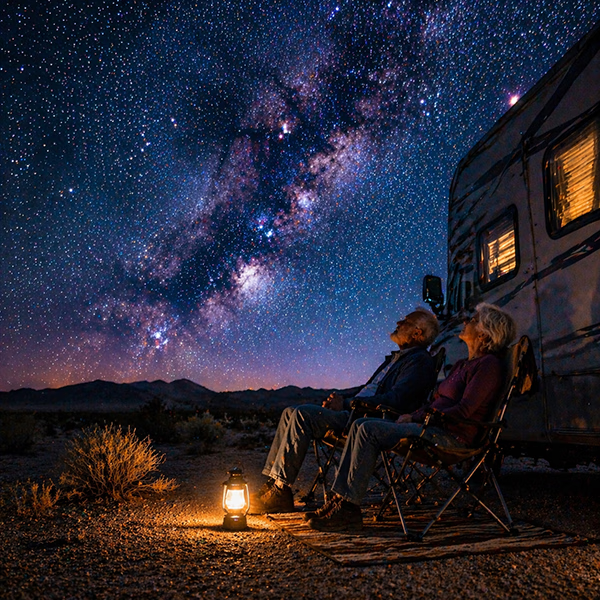
One of the most magical experiences of RV life happens after the sun goes down. Far from city lights, with nothing but open sky above you, the night sky transforms into a spectacular show that never gets old. And the best part? Your front-row seat is right outside your RV door.
Stargazing is one of those hobbies that requires almost no gear, no physical effort, and zero experience to enjoy. Whether you're identifying your first constellation or tracking planets across the sky, the desert Southwest is one of the best places in the country to look up and be amazed.
Why the Desert Is Perfect for Stargazing
Light pollution is the enemy of good stargazing, and the desert Southwest has remarkably little of it. Arizona, in particular, is home to some of the darkest skies in the continental United States. The dry climate means fewer cloudy nights, and the wide-open terrain gives you unobstructed horizon-to-horizon views.
If you're spending the winter in Yuma or elsewhere in southern Arizona, you're already in prime stargazing territory.
Getting Started: What You Need
The beauty of stargazing is its simplicity. Here's all you need to get started:
- Your eyes: Seriously — your naked eyes are enough to enjoy constellations, planets, and meteor showers. Give your eyes 15–20 minutes to adjust to the dark for the best viewing.
- A star chart or app: Free apps like Sky Map (Android) or Sky Guide (iPhone) let you point your phone at the sky and identify what you're looking at in real time.
- A reclining chair: A zero-gravity chair or simple reclining lawn chair saves your neck during long viewing sessions.
- A red flashlight: Regular white light ruins your night vision. A red-filtered flashlight or headlamp preserves it.
- Binoculars: Before investing in a telescope, try binoculars. A standard 7x50 or 10x50 pair reveals stunning details on the moon, star clusters, and even Jupiter's moons.
- Warm layers: Desert nights get surprisingly cold. Bring a blanket, beanie, and warm jacket even in mild seasons.
What to Look For
Constellations: Start with the easy ones — Orion (winter), the Big Dipper (year-round), Scorpius (summer), and Cassiopeia. Once you learn a few anchor points, the rest of the sky starts to make sense.
Planets: Venus, Jupiter, Mars, and Saturn are all visible to the naked eye at various times of year. They look like very bright, steady "stars" that don't twinkle. Your star app will tell you exactly where to look.
The Milky Way: In truly dark skies, the Milky Way arches across the sky like a glowing river. It's best seen in summer months, but even in winter you can catch its fainter edges.
Meteor showers: Mark your calendar for the major annual showers: the Perseids (August), Geminids (December), and Lyrids (April). On peak nights, you might see dozens of shooting stars per hour.
The International Space Station: The ISS is visible to the naked eye and looks like a bright, fast-moving star crossing the sky. Use the NASA "Spot the Station" website to find out when it's passing over your location.
Dark Sky Destinations Near Yuma
You don't have to travel far from Yuma to find exceptional dark skies:
- Kofa National Wildlife Refuge: About an hour northeast of Yuma, this remote refuge offers some of the darkest skies in the region.
- Organ Pipe Cactus National Monument: An International Dark Sky Park with ranger-led night sky programs.
- Picacho Peak State Park: Between Yuma and Tucson, this park offers good dark sky conditions and easy campground access.
- Your own campsite: Many RV parks outside of major cities offer surprisingly good stargazing right from your site, especially on moonless nights.
Taking It Further
If stargazing captures your imagination, consider these next steps:
- Join a local astronomy club: Many communities have clubs that host public viewing nights with telescopes.
- Attend a star party: These organized events bring together amateur astronomers with telescopes, knowledge, and enthusiasm. Arizona hosts several throughout the year.
- Invest in a portable telescope: Tabletop Dobsonian telescopes are affordable, easy to use, and powerful enough to see Saturn's rings and the craters of the moon.
Look Up More Often
In our busy, screen-filled lives, we rarely stop to look at the sky. RV living gives you the gift of dark skies and quiet nights — don't let them go to waste. Whether you're spotting your first shooting star or teaching a grandchild to find the North Star, stargazing connects you to something vast and timeless.
Spending the winter under Arizona's wide-open skies? Shangri-La RV Resort in Yuma puts you close to some of the best stargazing in the Southwest. Learn more at shangrilarv.com.